What MachineTranslation.com is and why it exists
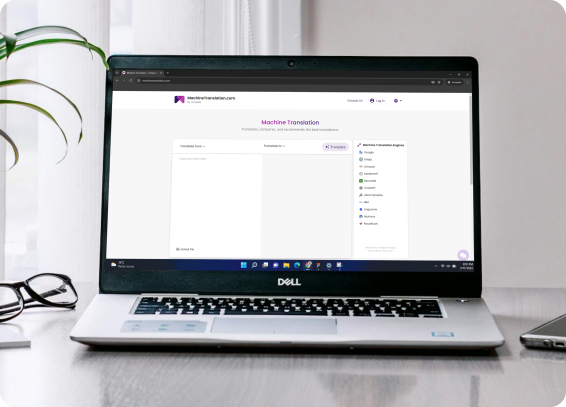
MachineTranslation.com is an AI translation platform built by Tomedes. It compares the outputs of up to 22 AI models, so you get the best translation most of them agree on. It exists because of a moment most businesses know: a translation is about to go to a client, a partner or a new market, and nobody on the team can tell if it is right. Tomedes, a translation company that has worked with more than 120,000 clients since 2007, saw even enterprise clients struggle to tell when an AI translation was wrong.
How it started
In April 2023, Tomedes launched MachineTranslation.com as a comparison platform. It put translations from several AI and machine translation providers side by side, with quality analysis and scores, so people could judge them in one place. Ofer Tirosh, CEO of Tomedes, started it after observing that a single AI model gives one answer and no sign of when it is wrong.

Why comparing was not enough
Comparing turned out not to be enough. Many business owners and managers who order translations do not read the target language, so they could not tell which version to trust, and in an internal study 46% of non-linguists said comparing outputs by hand cost more time than the AI saved. Rachelle Garcia, Head of AI, led the consensus approach. In the launch announcement on Slator, the language industry’s news and research publication, she described it as turning the old routine of comparing every output by hand into “scan what actually matters.”

Where humans come in
Consensus is not certainty, and the team says so. Where accuracy is critical, a professional translator reviews the result. Human Verification arrived in July 2024, inside the platform, so no outside agency is needed. Basically, a dedicated project manager, a real person reachable by email, coordinates the review. Reviewers work under NDA and see only the content they review.
MachineTranslation.com is built for small and mid-sized businesses and for the freelancers and agencies who work with them. Reviewers describe using it for website and product localization, marketing content, customer communication and client deliverables. That work arrives as files and projects: most sessions (60.5%) involve uploading a file (April to June 2026). The team reads the reviews and watches where this work gets stuck. Reviewers flagged long waits on large files, so the download step was rebuilt in September 2026. Businesses were averaging more than seven sessions to finish one translation project, so multi-file, multi-language selection arrived in October 2026.
How it kept improving
Each stage raised a new problem. More models meant a question of speed, and running 22 AI models at once without making users wait took work on the platform's infrastructure, led by Shashank Jain, the Tech Lead. The AI Translation Agent (October 2024) and Key Term Translations (December 2024) help keep tone and terminology consistent. Real projects turned out to be many files in many languages, so October 2026 added multi-file, multi-language sessions and XLIFF and MQXLIFF support for the files translators already work in. The team also publishes what it finds. In 28 days of production data, the quality gap between AI models was 0.17 points, against 1.66 points between language pairs, and consensus can still miss an assumption every model shares.
Where it stands today
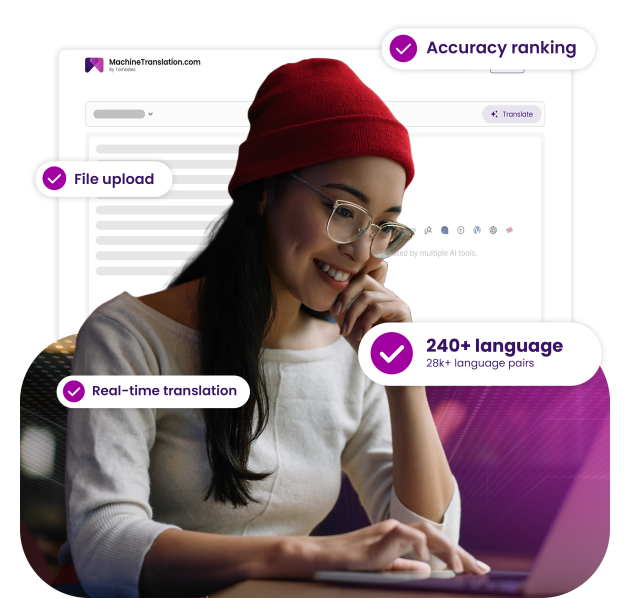
Today MachineTranslation.com runs every translation through up to 22 AI models, including ChatGPT, Claude, Gemini, DeepL, Google, Microsoft, Meta's Llama, Amazon Nova and 14 others, and shows each result side by side with a quality score. In internal testing on 10,000 segments across 10 language pairs, this reduced translation error risk by up to 90% compared with single-model output. In 28 days of production data (12 July to 8 August 2026), individual models showed a hallucination rate of 10 to 18%, against under 2% with 22-model consensus. G2 lists MachineTranslation.com as a Highest Performer in its Machine Translation Software category (May 2026).
What it does today

Shows up to 22 AI models’ outputs side by side.
Handles several files and several languages in one session.
Preserves the original layout of documents, up to 70MB.
Adds a professional human verification on request.
Never uses your content to train AI models. GDPR compliant.
What comes next
Plans the team has shared, and requests it keeps hearing.

Latest models
New AI models are added as they launch, so the consensus keeps improving.

More findings
More findings from live translations, including where AI still gets it wrong.

Feature requests
Reviewers ask for more control over which models count and clearer guidance on when to add a human reviewer.

More file formats
File support keeps widening for the work teams already do, most recently HTML, XLIFF and MQXLIFF.
Get the best translation that 22 AI models agree on
Paste text or upload a document and see where 22 AI models agree and where they do not. It is free to start.
Try now