March 13, 2025
Navigating a Global Recession and Tariff Through Market Expansion and AI Translation
With economic experts warning of a possible global recession 2025, businesses worldwide are bracing for financial uncertainty.
But what is a global recession exactly? A global recession occurs when multiple major economies experience prolonged economic decline, leading to reduced consumer spending, falling investments, and widespread job losses.
Adding to the uncertainty, increasing US tariffs on imports are disrupting international trade. These tariffs raise costs for businesses, squeeze profit margins, and limit market access. As a result, we’ve seen the US stock market down, with the S&P 500 dropping 2.7% in a single day—nearing a 10% correction.
To counteract these challenges, businesses must look beyond their domestic markets. Expanding into new international territories provides a lifeline, mitigating risks associated with economic downturns. One of the key enablers of this strategy is AI-powered translation, which removes language barriers and facilitates smooth entry into foreign markets.
Global economic uncertainty and the role of tariffs
A tariff is a tax imposed on imported goods, making them more expensive and less competitive in the domestic market. But what is a tariff in the context of the current economy? Rising global tariffs are increasing financial strain in several ways:
Higher production costs
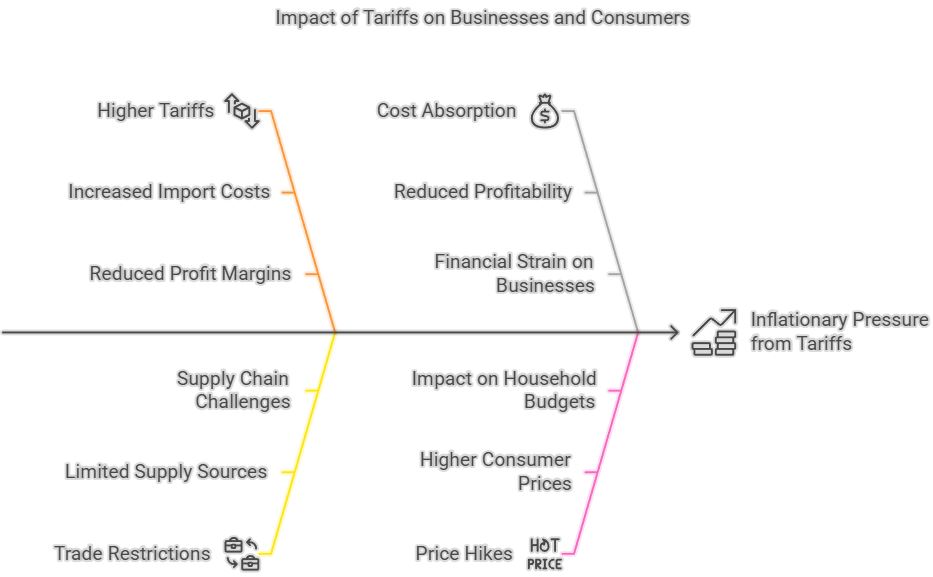
Businesses that depend on imported raw materials experience significant cost increases due to higher tariffs and trade restrictions. As a result, manufacturers are forced to either absorb these costs, which reduces profit margins, or pass them on to consumers through price hikes. This leads to inflationary pressure, making everyday goods and services more expensive and affecting both businesses and households.
Supply chain disruptions
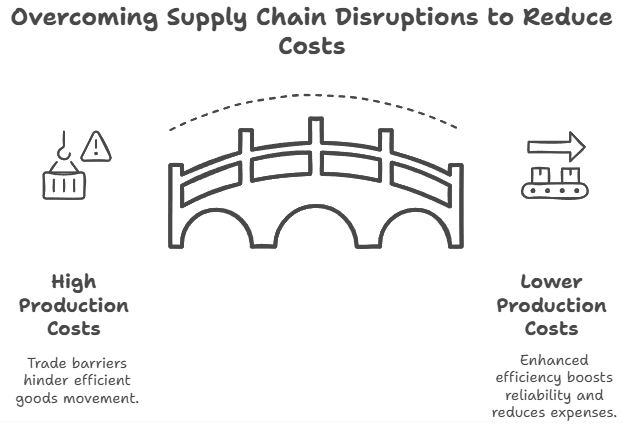
Trade barriers and increased tariffs disrupt established supply chains, making it more difficult for companies to move goods efficiently across borders. Shipping delays, rerouted trade routes, and increased regulatory requirements add to logistical expenses and reduce overall supply chain reliability. These inefficiencies can cause production slowdowns, inventory shortages, and missed delivery deadlines, negatively impacting industries ranging from retail to manufacturing.
Limited market access
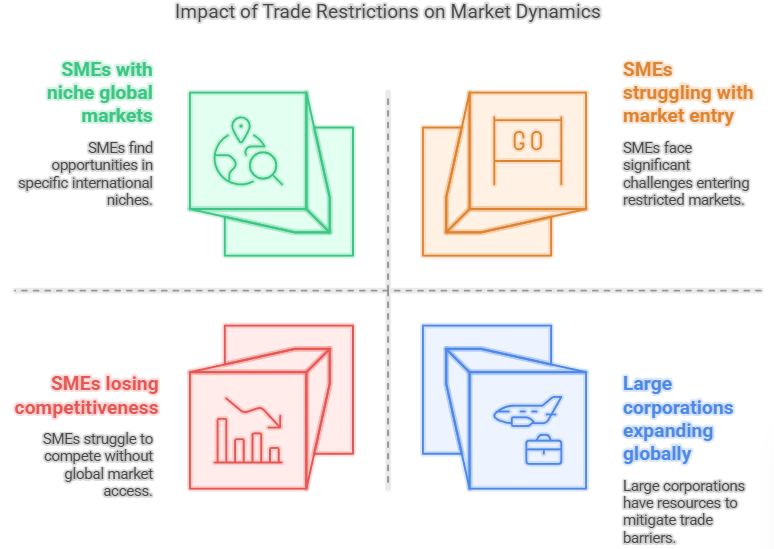
Trade restrictions limit the availability of foreign goods, reducing choices for both consumers and businesses. Companies that rely on international markets to sell their products may face shrinking customer bases, lower revenues, and decreased competitiveness. Small and medium-sized enterprises (SMEs), in particular, struggle to expand globally when faced with higher trade barriers, making it harder for them to compete with larger corporations that have more resources to navigate these challenges.
Retaliatory tariffs
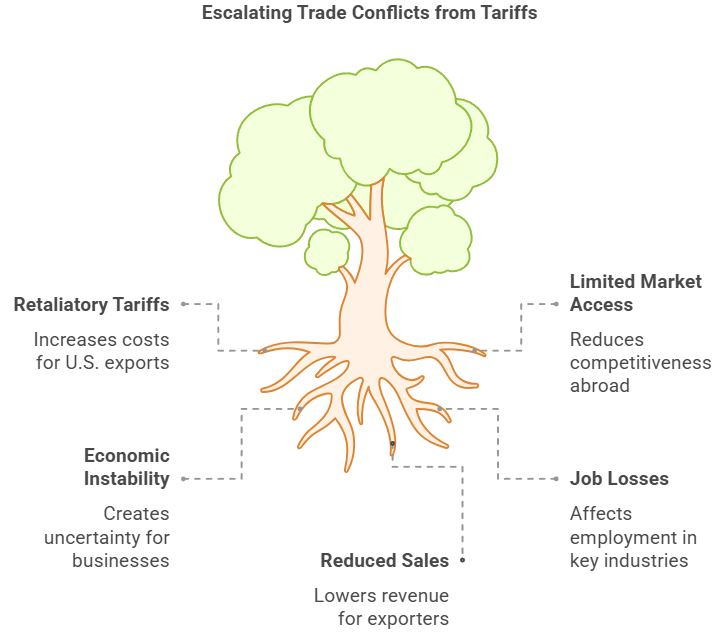
When one country imposes tariffs, others often respond with countermeasures, escalating trade conflicts and increasing economic instability. U.S. exports, such as agricultural products, automobiles, and technology, may face higher tariffs in foreign markets, making them less competitive. This can lead to reduced sales, job losses in affected industries, and long-term economic uncertainty as companies struggle to adapt to the shifting global trade landscape.
These factors contribute to the US stock market down, as investors lose confidence in future growth. The volatile market reflects growing fears that inflationary pressures and trade tensions could further slow economic recovery.
Historically, companies that diversified internationally during past recessions fared better, shielding themselves from regional economic shocks. Expanding globally provides a strategic way to hedge against economic uncertainty, ensuring stability even in turbulent times.
Why expanding to new markets is essential
During periods of economic instability, relying solely on a single market can be risky. Diversifying into new regions provides businesses with a cushion against economic downturns and allows for long-term growth opportunities. By expanding into multiple markets, businesses can:
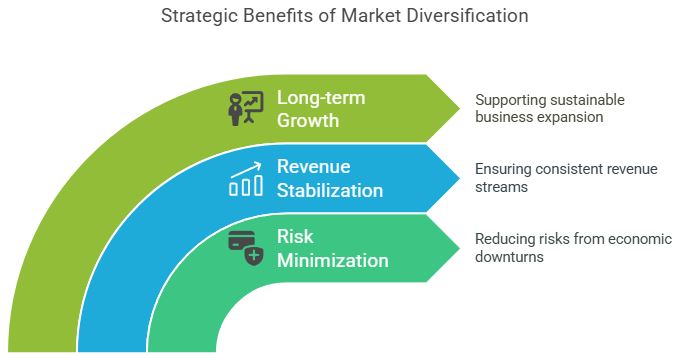
Reduce dependence on a single economy
Spreading operations across multiple regions helps businesses remain resilient even if one market faces economic decline. Diversification minimizes risks associated with economic downturns, regulatory changes, or geopolitical instability in a single country. By expanding into different markets, companies can stabilize revenue streams and ensure long-term growth.
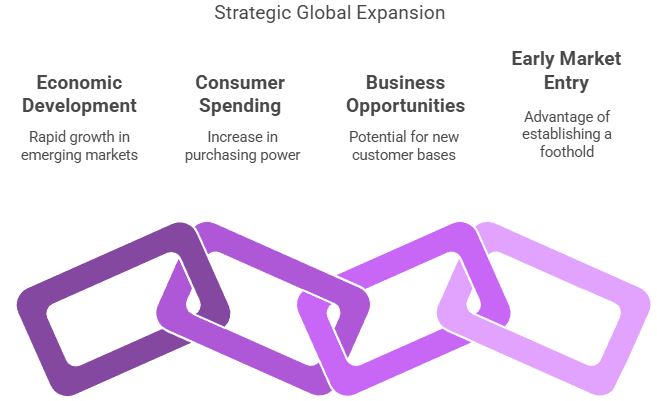
Access high-growth emerging markets
Countries in Asia, Africa, and Latin America are experiencing rapid economic development and a surge in consumer spending. These regions present lucrative opportunities for businesses looking to tap into new customer bases and expand their global reach. Entering these markets early allows companies to establish a strong foothold before competition intensifies.
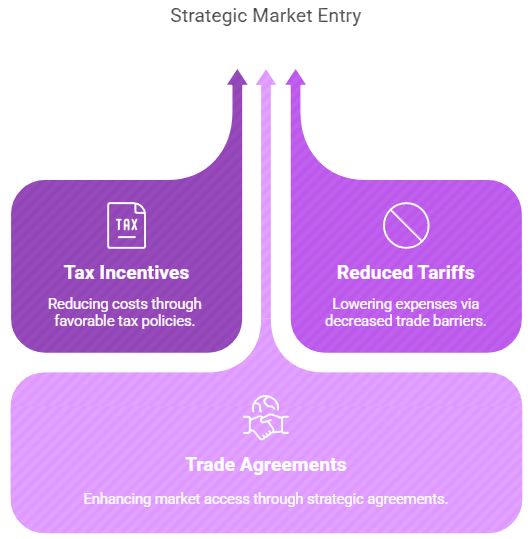
Leverage favorable trade policies
Certain regions offer tax incentives, reduced tariffs, and trade agreements that make international expansion more cost-effective. By strategically entering markets with business-friendly policies, companies can lower operating expenses, enhance supply chain efficiency, and maximize profits. Taking advantage of these trade benefits can provide a competitive edge in global markets.
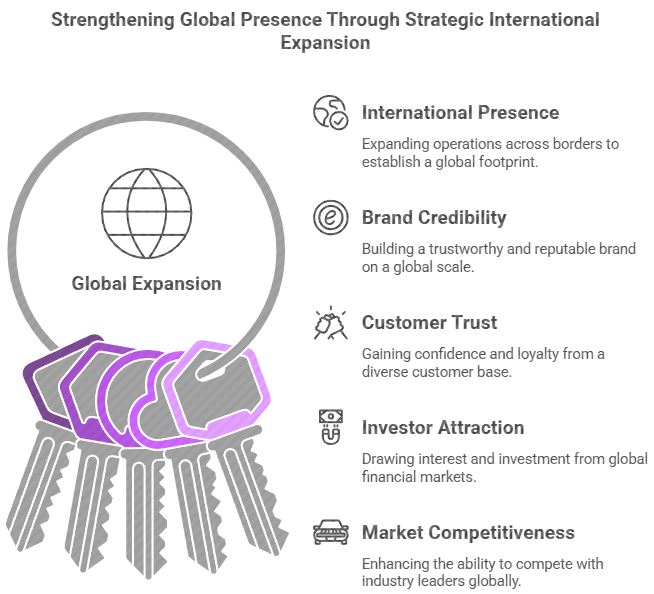
Increase brand recognition and global competitiveness
Expanding into multiple countries strengthens a company’s global presence and enhances brand credibility. A well-established international footprint improves customer trust, attracts investors, and increases market share. Companies operating on a global scale are also better positioned to compete with industry leaders and adapt to shifting consumer preferences.
Expansion and Global Demand Trends
As domestic demand in the U.S. contracts due to economic uncertainties, international markets present new avenues for growth. Businesses looking to expand globally can capitalize on rising consumption trends across different regions. From emerging economies with growing middle-class populations to stable trade hubs, the global market landscape offers diverse opportunities for companies to scale their operations and tap into fresh revenue streams.
Southeast Asia: A booming consumer market
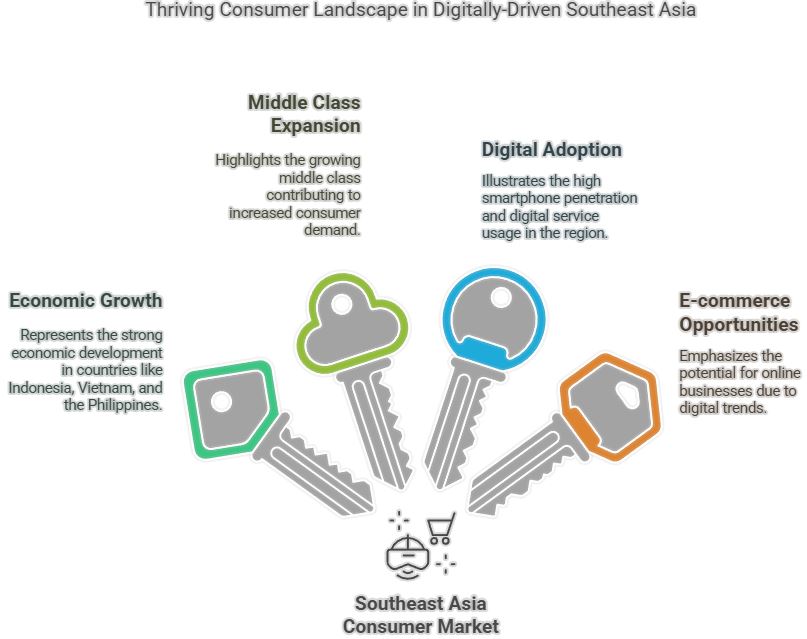
Southeast Asia is witnessing a surge in consumer demand, fueled by its rapidly expanding middle class and increasing disposable income. Countries such as Indonesia, Vietnam, and the Philippines are experiencing strong economic growth, driving demand for consumer goods, digital services, and financial technology solutions. The region’s high smartphone penetration and digital adoption rates make it a prime target for e-commerce, online banking, and mobile-first businesses.
Europe: Stable trade hubs despite inflation
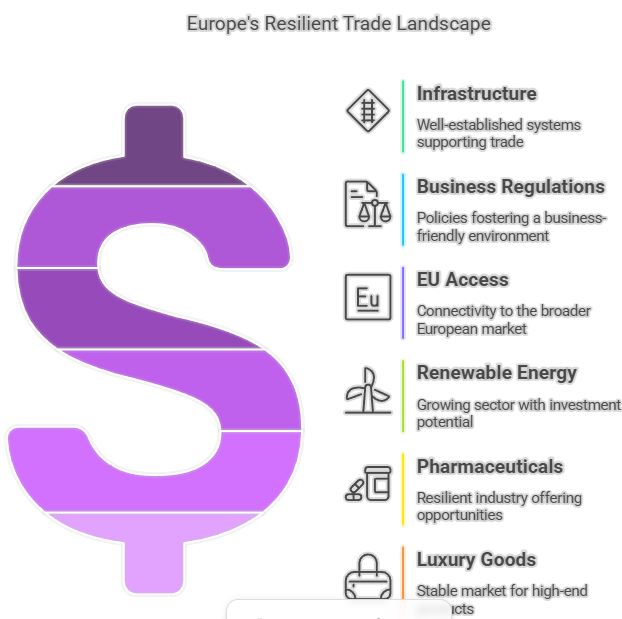
Despite ongoing inflationary pressures, key European economies like Germany, France, and the Netherlands continue to serve as strong trade and investment hubs. These markets offer well-established infrastructure, business-friendly regulations, and access to the broader European Union, making them attractive destinations for global companies. Additionally, industries such as renewable energy, pharmaceuticals, and luxury goods remain resilient, providing investment and expansion opportunities.
Latin America and Africa: A digital-first growth opportunity
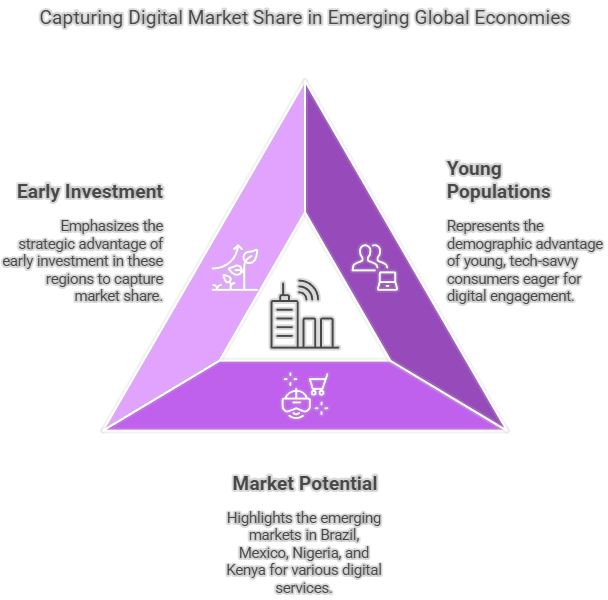
Latin America and Africa are home to young, tech-savvy populations eager to engage with digital services and e-commerce platforms. Brazil, Mexico, Nigeria, and Kenya are emerging as key markets for fintech, mobile payments, and on-demand services. With internet connectivity rapidly expanding and digital transformation accelerating, businesses that invest in these regions early can build strong brand loyalty and capture market share in sectors like online retail, entertainment, and financial services.
AI translation as the key to global market entry
Accurate translation is essential for successful international expansion, as even minor errors can lead to customer confusion, compliance issues, or legal consequences. Businesses expanding globally must ensure that product descriptions, marketing materials, and legal documents are not only linguistically accurate but also culturally relevant. AI translation provides a cost-effective solution by automating the process while maintaining high levels of accuracy, helping companies communicate effectively in new markets.
Unlike traditional translation methods that require expensive human translators for every document, AI-powered tools can process large volumes of text quickly and efficiently. By using machine learning and contextual analysis, AI translation ensures consistency in terminology, reducing the need for manual revisions. This not only cuts costs but also speeds up market entry, allowing businesses to launch products faster while maintaining accuracy and compliance with local regulations.
This is where MachineTranslation.com comes in, offering cutting-edge AI-powered translation tools:
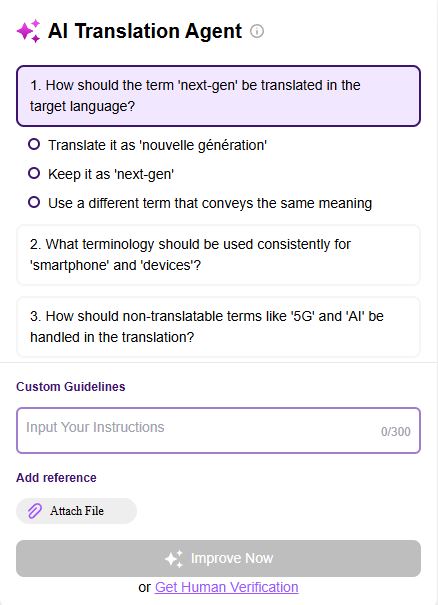
AI Translation Agent
The AI Translation Agent enhances accuracy by learning from user preferences, refining translations based on past interactions, and remembering previous revisions. This intelligent feature ensures that businesses can maintain consistency in tone, terminology, and style without repeatedly adjusting the same phrases. By adapting to user input over time, the AI Translation Agent delivers increasingly accurate and customized translations, making it a valuable tool for companies that require precise multilingual communication.
Multi-Engine Aggregation
Rather than relying on a single translation engine, MachineTranslation.com integrates multiple AI-powered translation sources to generate the best possible output. This feature enables users to compare different machine-generated translations side by side, selecting the one that best fits their needs. By leveraging various AI models, businesses can ensure their translations are more accurate, contextually relevant, and suited to industry-specific requirements.
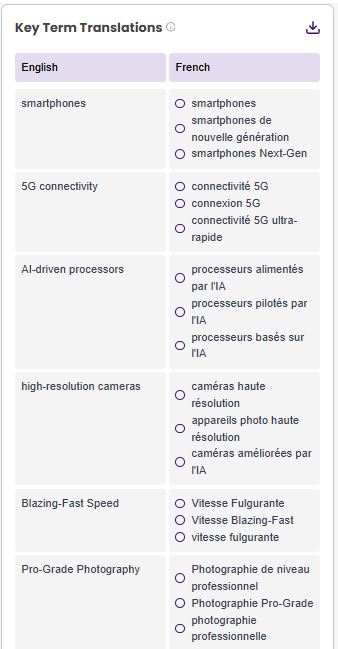
Key Term Translations
For businesses dealing with technical, legal, or industry-specific content, maintaining consistency in terminology is crucial. The Key Term Translations feature automatically identifies specialized terms and ensures they remain uniform across all translated materials. Users can compare multiple translation options for key terms, allowing them to select the most precise and contextually appropriate version. This capability is particularly useful for industries like healthcare, finance, and engineering, where precision is essential.
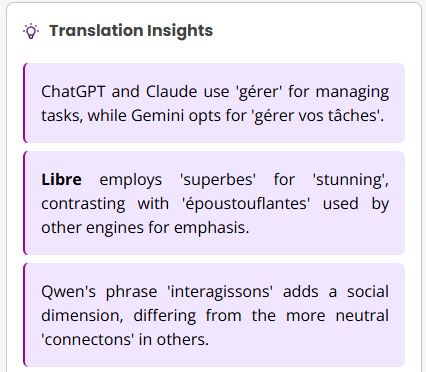
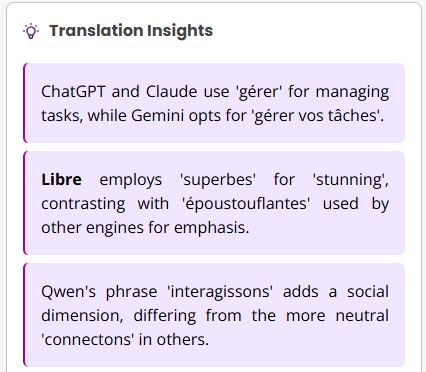
AI-Powered Insights
Beyond basic translation, AI-powered insights analyze the nuances of each translation to provide recommendations for improvement. This feature evaluates the tone, clarity, and accuracy of translated text, offering suggestions to enhance readability and ensure the message aligns with the intended audience. Businesses can use these insights to refine their content further, making their translations more effective and impactful.
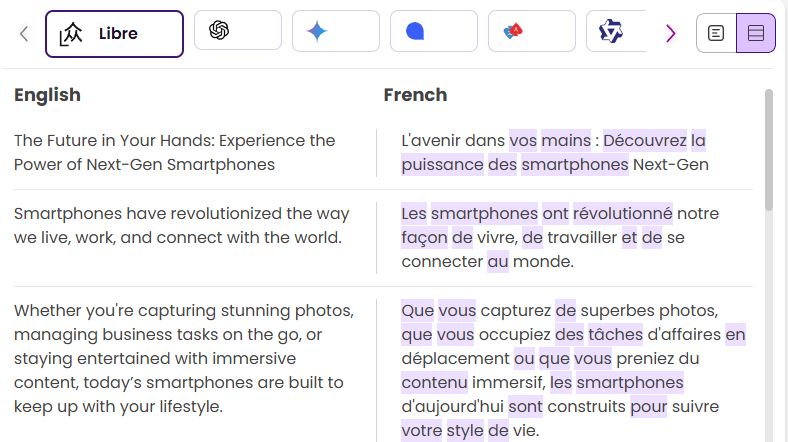
Bilingual Segments View
The segmented bilingual user interface simplifies the process of reviewing and editing translations by displaying source text and translated text side by side in smaller, manageable sections. This allows users to easily compare and refine each segment without navigating through long blocks of text. By enabling targeted edits, this feature improves accuracy and ensures a more polished final translation, making it especially useful for businesses working with complex or high-volume multilingual content.
How AI Translation Drives International Success
Businesses across industries are using AI-powered translation to successfully expand into new markets, overcoming language and localization challenges. Here are two compelling case studies demonstrating how AI translation enables seamless international growth.
Beauty industry expansion to Sweden
A global beauty brand expanded into the Swedish market, known for its high skincare standards. Adapting product descriptions and marketing materials was challenging, but AI translation helped localize content while keeping the brand’s unique messaging. This ensured the translations resonated with Swedish consumers and maintained industry-specific accuracy.
AI translation also helped the brand comply with Sweden’s strict labeling regulations, avoiding legal issues and delays. The tool streamlined the process, reducing costs and saving time compared to manual translation. With AI-powered translation, the company successfully entered the Swedish market with accuracy, efficiency, and consumer trust.
Global expansion on a $1,000 budget
A small business with a tight budget successfully expanded into international markets by leveraging AI-powered translation. Instead of hiring expensive human translators, they used AI to localize their website, customer support, and marketing materials, ensuring clear and culturally relevant communication. This strategic approach allowed them to connect with global audiences efficiently and affordably.
By utilizing AI translation, the business maintained linguistic accuracy and brand consistency across multiple languages while keeping costs low. The platform’s ability to refine terminology and tone ensured that their message resonated with international customers. This case study demonstrates that global expansion is no longer limited to large corporations—it’s now accessible to businesses of all sizes.
Conclusion
As fears of a global recession 2025 continue to rise, businesses must take proactive steps to secure their future. Rather than waiting for economic conditions to improve, now is the time to expand internationally and reduce reliance on a single market.
MachineTranslation.com empowers businesses to navigate global markets seamlessly, offering a cost-effective, scalable, and accurate translation solution. Expanding internationally is not just a survival strategy—it’s an opportunity for long-term growth.
Don’t let economic uncertainty hold your business back. Leverage AI translation to break language barriers and stay ahead in the global economy. Get your 100,000 free credits each month today by signing up to our free subscription plan.

By Clarriza Heruela
Clarriza Mae Heruela graduated from the University of the Philippines Mindanao with a Bachelor of Arts degree in English, majoring in Creative Writing. Her experience from growing up in a multilingually diverse household has influenced her career and writing style. She is still exploring her writing path and is always on the lookout for interesting topics that pique her interest.
Share:


