July 4, 2025
Why DeepSeek’s Ban Is a Wake-Up Call for Anyone Using AI Translation
DeepSeek, a popular AI application, was recently banned in Germany for breaking strict data protection laws. The platform was found transferring user data illegally, without clear consent or transparency. If you're using AI for language translation, this news should stop you in your tracks.
This isn’t just someone else’s problem, it’s a warning shot. When an AI translation tool mishandles sensitive data, it’s not just a policy violation, it’s a legal, financial, and reputational risk to your business.
In today’s AI-driven world, data privacy isn’t a feature. It’s the foundation. And ignoring it isn’t just risky, it’s reckless.
What happened with DeepSeek?
German regulators launched an investigation into DeepSeek after multiple complaints about its data practices. The authorities found that the app transferred personal data outside the EU without informing users or obtaining valid consent. That’s a direct violation of GDPR, one of the strictest data protection laws globally.
The ruling is clear: AI tools must prioritize transparency and data protection. DeepSeek didn’t disclose how user input was stored or shared, making its entire platform legally vulnerable. If you're using any AI translator, you should know exactly where your data goes and who can access it.
This ban serves as a warning to businesses relying on low-cost or unknown translation apps. Using tools that fail to protect your content puts you at risk of compliance failures and costly fines. It also endangers your client relationships and brand reputation.
What this means for AI translation
AI translation platforms process everything from legal contracts to medical records and confidential business memos. If your translator stores or reuses your input data, it could be exposed to third parties or used to train unrelated models. That exposure isn’t just risky, it might be illegal.
Off-the-shelf translation tools often provide little control over how your data is handled. Some log your inputs indefinitely, with vague policies buried in their terms and conditions. When dealing with personal or sensitive data, this becomes a serious liability.
You're trusting these tools with your most valuable content. If they can’t guarantee data-secure and professional translations, they aren’t worth the convenience. Privacy-first AI translation isn’t just about protection, it’s about trust and long-term value.
Data privacy red flags in AI translation tools
Not all translation engines are built to protect your privacy and some can actively put your business at risk.
No data retention policy
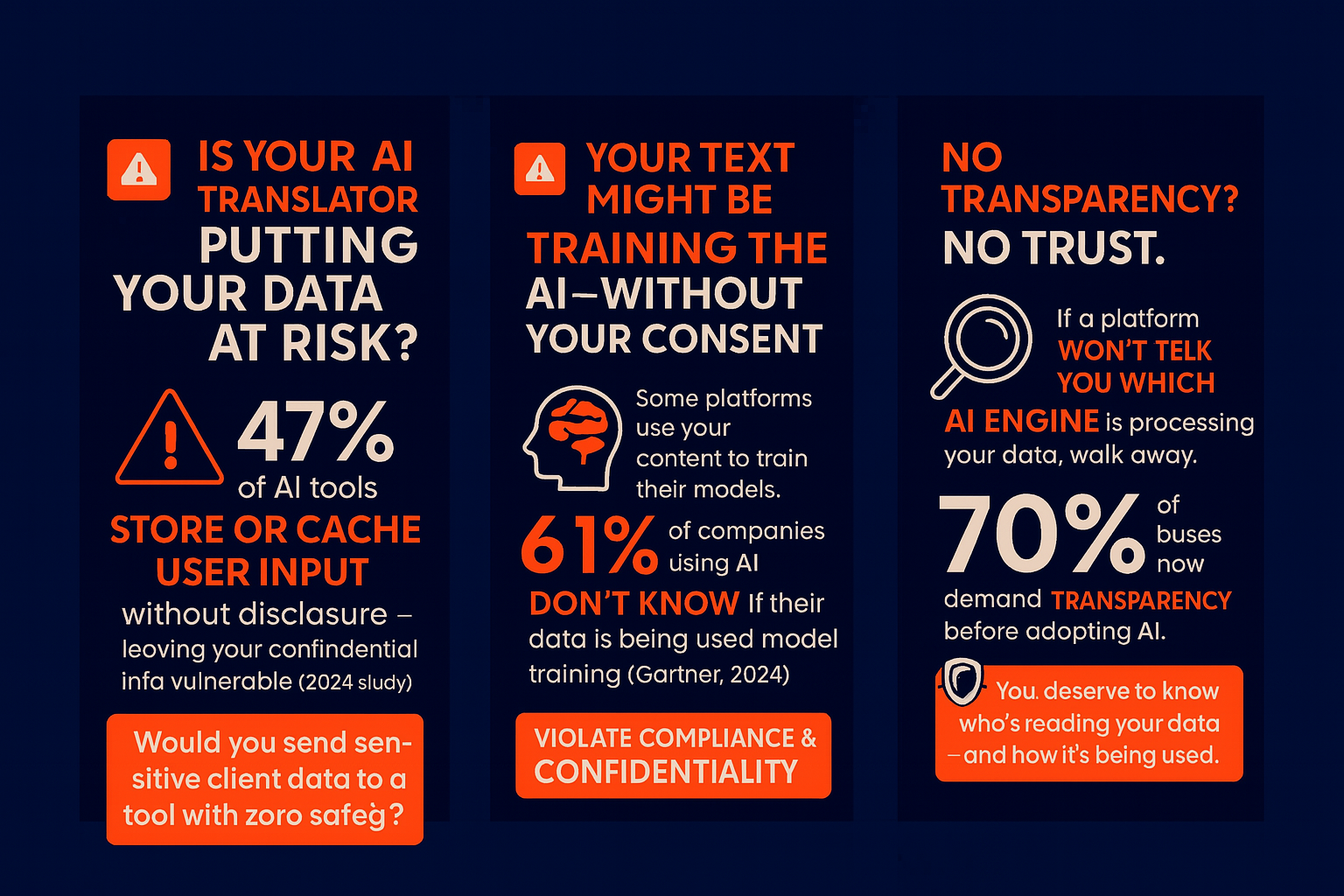
If a platform doesn’t clearly state how it handles your input, that’s a major red flag. A 2024 analysis revealed that 47% of AI tools store or cache user input without disclosure, leaving sensitive data vulnerable to reuse or breaches.
Content used for model training
Some platforms automatically use your content to train their models, often buried deep in the fine print. This practice violates basic data protection principles—and could compromise compliance. In fact, 61% of companies using AI lack visibility into whether their data is used for training, according to a recent Gartner study.
Lack of transparency about engines
Centralized platforms that don’t disclose which AI engines process your text leave users in the dark. You deserve to know exactly which models are handling your data—and whether they meet SOC 2 or GDPR-compliant standards.
With 70% of businesses prioritizing transparency as a core requirement for AI adoption, opaque systems are no longer acceptable.
How MachineTranslation.com solves this
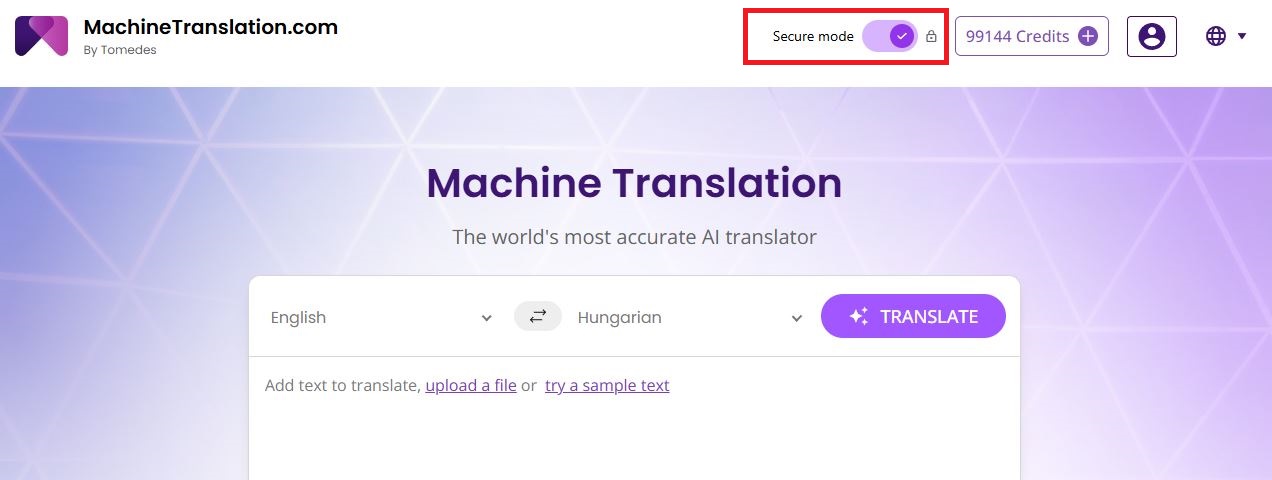
MachineTranslation.com solves these risks with a privacy-first approach. Its SOC 2-Compliant Secure Mode only runs translations through vetted engines that meet strict data protection standards. If an engine doesn’t comply, it's excluded by default.
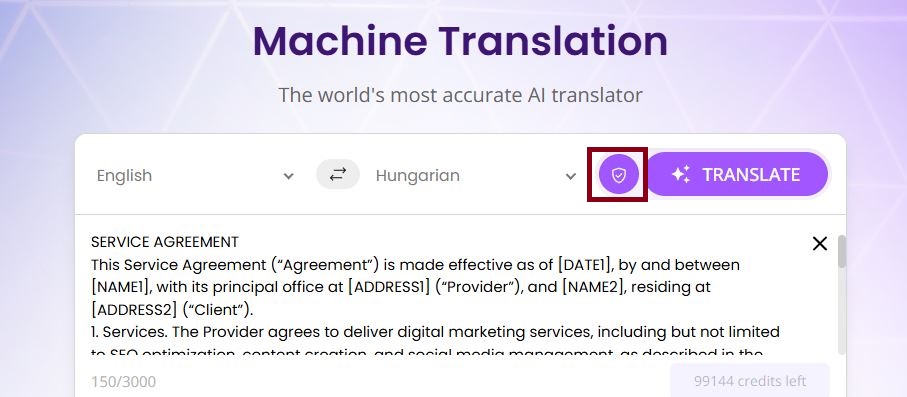
To further protect you, every input can be anonymized automatically. Names, numbers, emails, all masked before the text is sent to any AI model. That means no accidental leaks of client data, legal terms, or internal memos.
MachineTranslation.com also ensures there’s no data retention. Your text is not stored, reused, or sent to train future models. Temporary URLs expire in 20 minutes, so even guest sessions stay secure.
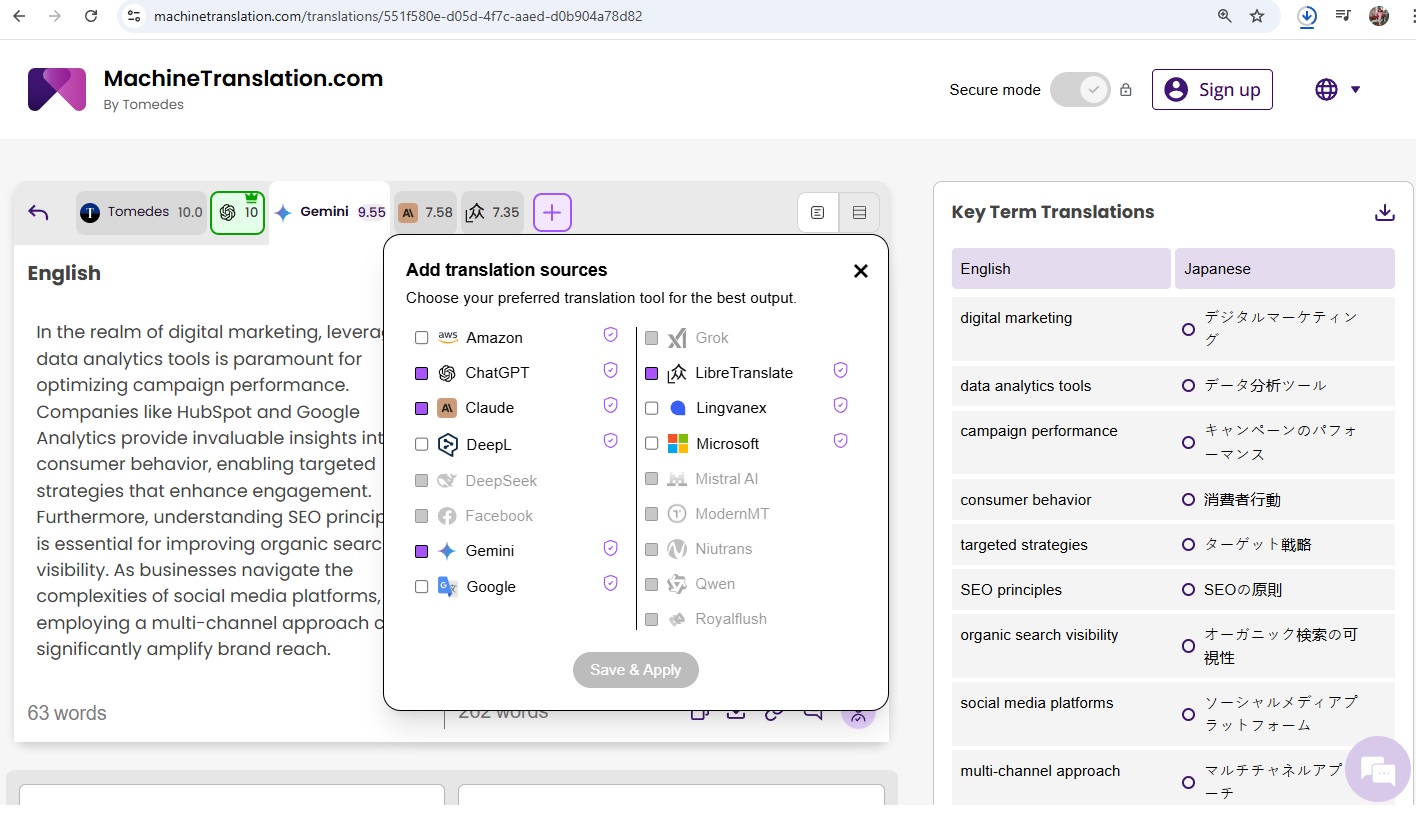
You can choose exactly which AI engines to use, each labeled with its compliance status. Whether you're in healthcare, finance, or legal, you get full control. And the Segmented Bilingual View lets you review translations line by line, a must for quality assurance.
Best practices: Secure AI translation for privacy-sensitive content
Start by using Secure Mode every time you handle legal, healthcare, or financial documents. This single step ensures only SOC 2-compliant engines process your sensitive data. It’s the easiest way to stay safe.
Use secure mode by default
Always activate Secure Mode when handling legal, healthcare, or financial content. It ensures only SOC 2-compliant AI engines are used.
Enable automatic anonymization
Turn on anonymization to automatically mask sensitive data like emails, names, and numbers before translation begins.
Vet your AI engines
Choose only AI sources with clear compliance credentials. MachineTranslation.com shows visible labels for each engine’s security status.
 Avoid input-training engines
Don’t use tools that train on your data. Ensure your content remains private and isn’t repurposed for model training.
Use memory and glossary features only when logged in
Leverage personalization options like memory or glossaries as a registered user to keep preferences secure and usage isolated.
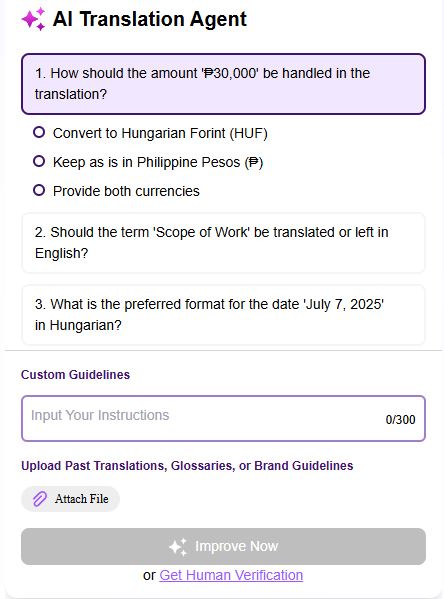
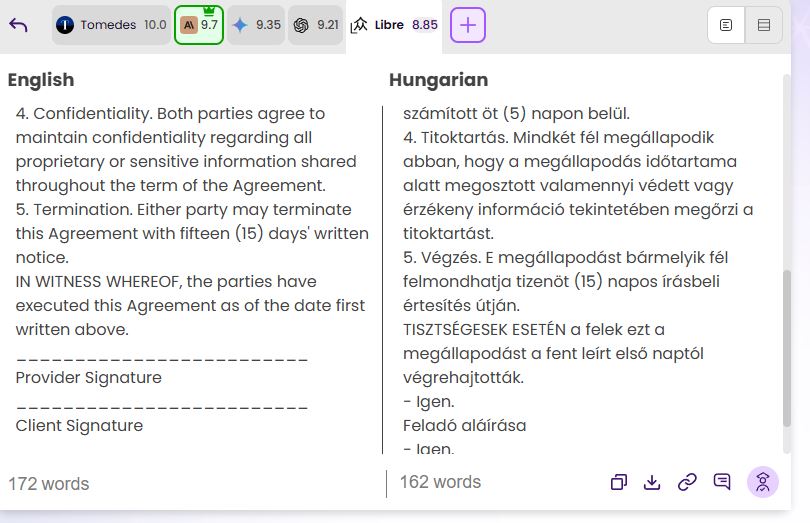
Utilize the Segmented Bilingual View for long documents
Use MachineTranslation.com's Segmented Bilingual View to review translations line by line, minimizing risk and ensuring accurate translations.
Limit guest access exposure
Rely on expiring sessions for guest use. MachineTranslation.com automatically ends these in 20 minutes to preserve privacy.

Why regulated industries are making the shift
Legal, healthcare, and financial sectors are rapidly adopting AI translation, but privacy concerns are rising just as fast. In 2024 alone, AI-related privacy incidents jumped by over 56%, especially in finance and law.
Despite widespread AI use, 83% of European professionals now use generative AI at work, most organizations lack clear policies. Only 31% operate under formal guidelines, creating major compliance risks.
That’s why industries are turning to MachineTranslation.com:
Law firms use it to translate contracts securely, with names and case details anonymized to protect confidentiality.
Hospitals rely on it for translating patient records, as 80% now use AI for sensitive data handling.
Finance teams trust it to translate audit reports across languages, critical in a field where 90% use AI, but only 18% have clear policies and just 30% protect client data.
With just 29% applying AI policies consistently, secure translation is no longer optional.
Yet as AI adoption grows, so do the risks. Most financial professionals (63%) fear generative AI could be misused against them, and 71% expect deepfakes to become more advanced. Still, only 18% of organizations are investing in detection tools, leaving a dangerous gap in security.
The reason? Total control, clear compliance, and professional translations with accurate translations every time. If you’re in a regulated industry, you need more than speed, you need provable security.
Conclusion
The DeepSeek ban is more than a headline. It’s a message that ignoring AI data risks can backfire hard. If your current translator isn’t transparent about data use, you’re playing with fire.
You don’t have to sacrifice speed or accuracy to stay compliant. Tools like MachineTranslation.com give you both. The smart choice is the secure one.
Experience secure, high-quality translations in over 270 languages, powered by real-time AI insights and built-in data protection. Subscribe to MachineTranslation.com’s plan today and enjoy 100,000 free words every month, no risk, no hidden fees.

By Clarriza Heruela
Clarriza Mae Heruela graduated from the University of the Philippines Mindanao with a Bachelor of Arts degree in English, majoring in Creative Writing. Her experience from growing up in a multilingually diverse household has influenced her career and writing style. She is still exploring her writing path and is always on the lookout for interesting topics that pique her interest.
Share:


