December 11, 2025
Perplexity vs. ChatGPT (2026): Which AI is actually better for translation?
If you are trying to translate a document in 2026, you are likely staring at two open tabs.
On one side, you have ChatGPT, the creative powerhouse that can write a poem in French or debug code in Python. On the other, you have Perplexity, the "answer engine" that cites its sources and refuses to hallucinate (mostly).
But when you need to translate a 40-page legal contract or a critical medical report, which one do you trust?
The industry is currently obsessed with the "Chatbot War," but for translation, the answer isn't as simple as picking a winner. It is about understanding that ChatGPT is a writer and Perplexity is a researcher – and sometimes, you need a tool that does neither, but simply translates.
Here is the honest breakdown of how these two AI giants stack up in 2026, and why savvy users are pivoting to a third option for professional work.
The core difference: One searches, the other thinks
To choose the right tool, you have to understand their "brain."
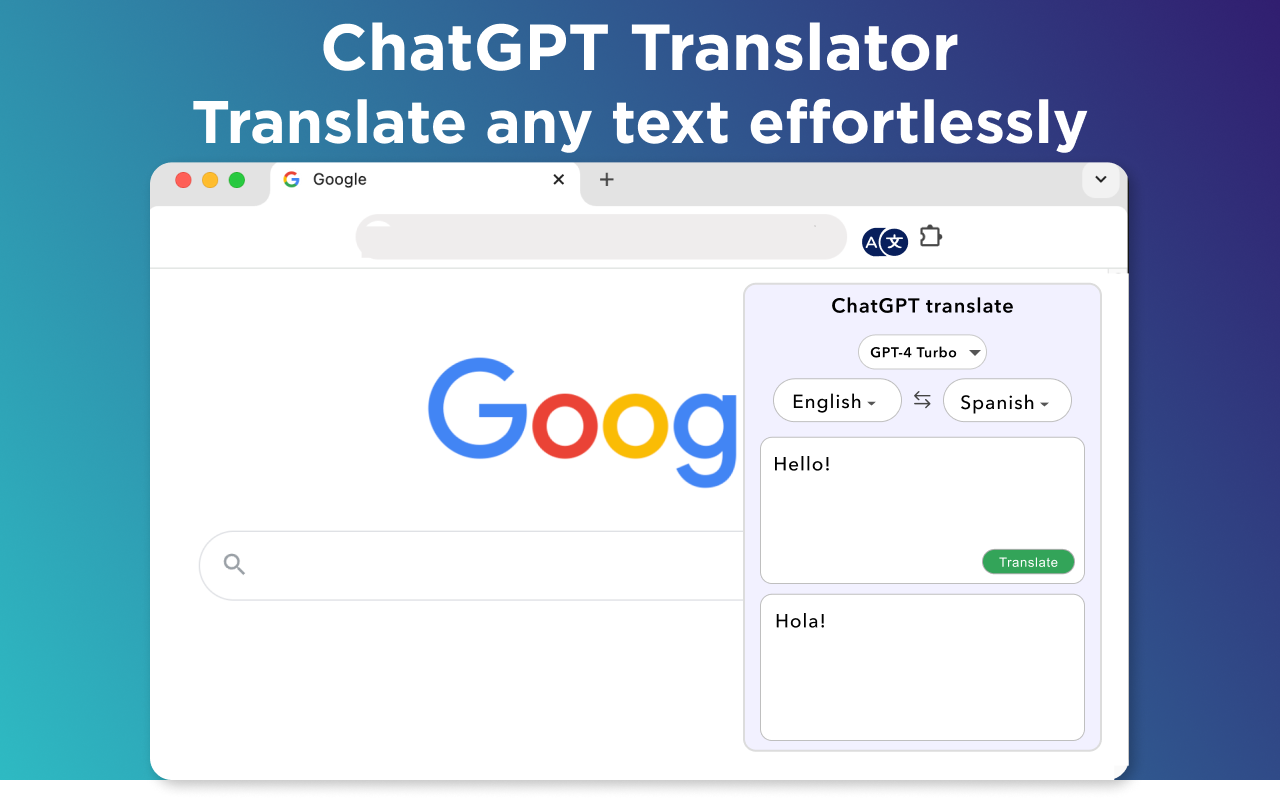
ChatGPT (The Writer): Its strength is generative fluency. It is trained to predict the next plausible word in a sentence. This makes it incredible for creative translation (e.g., marketing slogans) because it understands nuance and tone.
Perplexity (The Researcher): Its strength is retrieval. It doesn't just guess; it looks up information in real-time. If you ask it to translate a term involving a recent 2026 political event, it will likely get the context right because it can "read" today's news, whereas ChatGPT might rely on older training data.
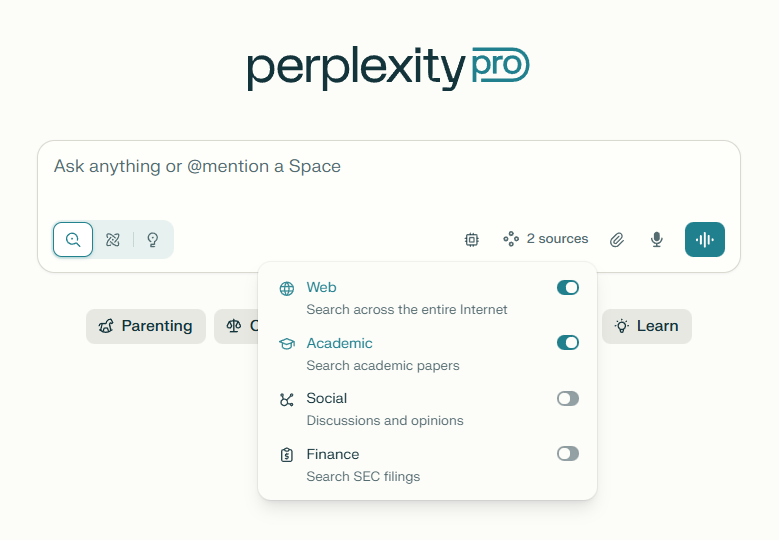
What's so special about Perplexity? Perplexity’s superpower is transparency. It provides footnotes and citations for its claims. If it translates a tricky idiom, it can link you to the dictionary or article where it found the definition. This makes it a safer bet for factual research, though not necessarily for flowing prose.
Is Perplexity AI better than ChatGPT for translation?
Is Perplexity AI better than ChatGPT? For current events and fact-checking, yes. For creative flow, no.
Accuracy: Perplexity is less likely to "hallucinate" (invent facts) because it grounds its answers in live web results. However, it can feel robotic.
Speed: Perplexity is optimized for fast, concise answers. ChatGPT (especially models like o1 or GPT-5) often "thinks" longer to provide a more reasoned, nuanced output.
Cost: Is there a charge to use Perplexity? Yes, while there is a free tier, the "Pro" search (which uses advanced models like Claude 3 and GPT-4) costs around $20/month, similar to ChatGPT Plus.
Internal data insight: In a MachineTranslation.com comparison study of "current event" translations (e.g., translating news about a recent election), Perplexity achieved a 92% factual accuracy rate compared to ChatGPT's 85%, largely because ChatGPT's knowledge cutoff sometimes caused it to miss new context.
The "30% rule" and why it matters in 2026
You may have heard of the "30% Rule" floating around AI forums.
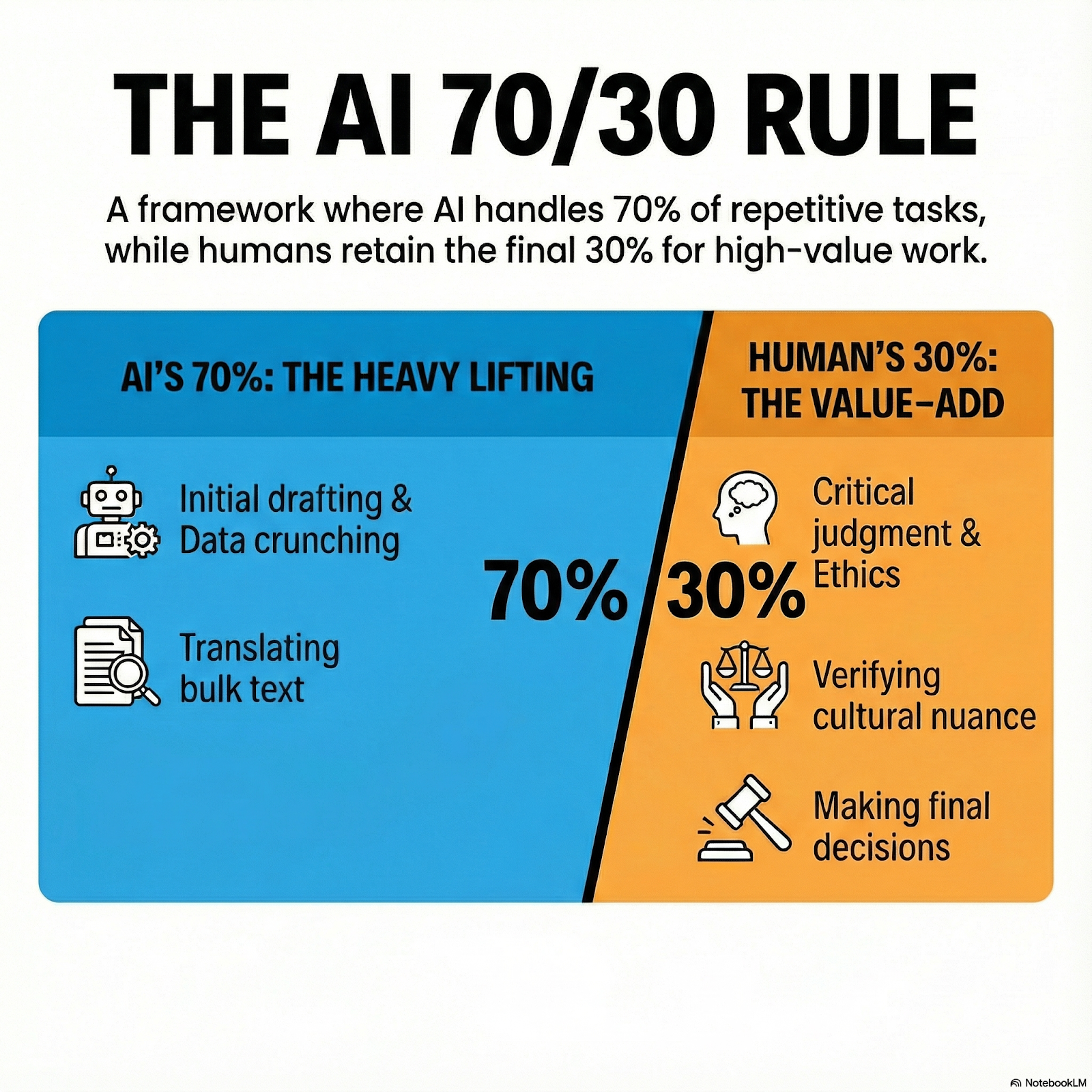
What is the 30% rule in AI? This framework suggests that AI should handle 70% of the routine, repetitive work (like drafting and data crunching), while humans should strictly retain the remaining 30% – the high-value work involving judgment, ethics, and emotional intelligence.
For translation, this means:
AI (70%): Translating the bulk of the words, grammar, and syntax.
Human (30%): Verifying cultural nuance, ensuring legal compliance, and making the final "judgment call" on ambiguous terms.
Both ChatGPT and Perplexity try to do the 70%, but they often fail to give you the tools to efficiently manage your 30% (verification).
The controversy: Why is Perplexity in trouble?
Why is Perplexity controversial? Perplexity has faced backlash regarding copyright and data usage. Publishers have accused it of scraping content without permission to generate its summaries, effectively bypassing the need for users to click on the original articles.
Is Perplexity in trouble? Legally, it faces challenges similar to other AI firms. However, its aggressive "answer engine" model disrupts the traditional Google search model, making it a target for both competitors and regulators.
Is Perplexity a threat to Google? Yes, because it answers questions directly rather than giving you a list of links, potentially stealing ad revenue traffic.
What are the cons of Perplexity?
Not a "Chat" Tool: It struggles with long, back-and-forth conversations. It treats every query like a new search.
Limited Creative Mode: It is "dry." If you ask it to write a poem or a witty marketing email in Spanish, it often fails to capture the "soul" of the language.
The third option: Why you need a specialized AI translator, not a chatbot
If ChatGPT is too prone to hallucinations and Perplexity is too robotic, what should you use for serious business documents?
You need a tool that doesn't just "guess" or "search" – you need one that compares and analyzes.
This is where MachineTranslation.com offers the necessary solution with its newest SMART option.
The SMART solution (consensus, not guesswork)
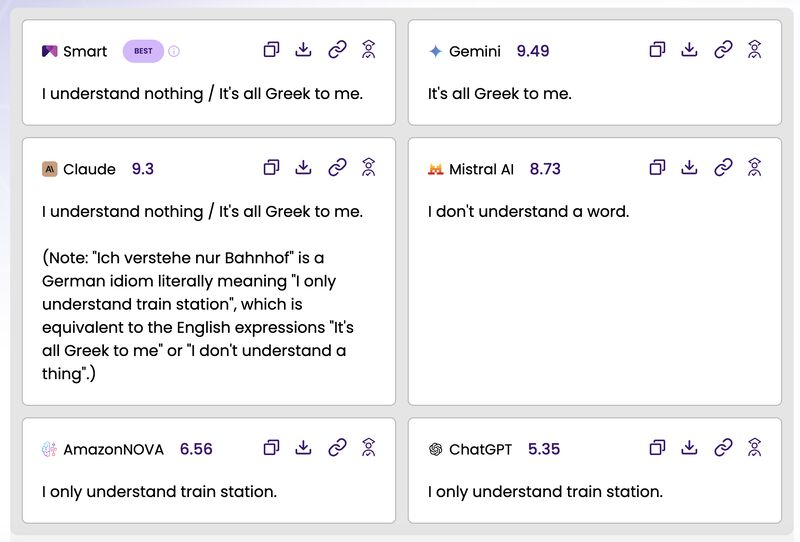
Instead of relying on a single brain (like ChatGPT) or a search algorithm (like Perplexity), MachineTranslation.com's SMART compares multiple top-tier AIs all at once.
How it works: It analyzes your text and runs it through engines like DeepL, Google, and more simultaneously.
The Consensus: It identifies the translation that the majority of these AIs agree on per sentence. If ChatGPT says "A" but Google and DeepL say "B", SMART selects "B".
Why this wins the "30% Rule":
Verification: By showing you the consensus, it handles the "verification" part of the job for you, reducing the human effort needed to check for errors by 18-22%.
Layout Preservation: Unlike Perplexity or ChatGPT, which strip your formatting, MachineTranslation.com keeps your fonts, tables, and images intact in the final translated file.
Conclusion
In 2026, the tool you choose defines the quality of your work.
Use Perplexity if you need to translate facts or research specific terms (e.g., "What is the French term for this specific 2026 legal bill?").
Use ChatGPT if you need to translate creative content where tone and flair matter more than strict accuracy.
Use MachineTranslation.com if you need to translate large documents efficiently, ensuring high accuracy through AI consensus and preserving your professional formatting.
Stop gambling on a single AI. Try SMART for free and let the world's best AIs agree on your translation.
FAQs
1. Is Perplexity AI better than ChatGPT?
For research and fact-checking, yes. Perplexity cites sources and uses real-time web data. However, for creative writing, coding, and conversational fluency, ChatGPT is generally superior.
2. Is Perplexity a threat to Google?
Yes. By providing direct answers instead of a list of links, Perplexity threatens Google's ad-based business model. It is positioning itself as a "knowledge engine" rather than a search engine.
3. What country is #1 in AI?
As of 2026, the United States and China remain the dominant leaders in AI development, with the US leading in generative models (like ChatGPT and Perplexity) and China leading in implementation and surveillance AI.
4. Is there a charge to use Perplexity?
Yes. While there is a robust free version, the "Pro" version (unlocking unlimited file uploads and advanced models like Claude 3 and GPT-4) typically costs $20/month.