June 25, 2026
Why we stopped trusting Google to grow MachineTranslation.com
There's a moment every product team eventually faces: you look at your traffic sources and realize you've been building on someone else's land.
For MachineTranslation.com, that moment came when we pulled our channel breakdown and saw that organic search had quietly become almost everything. Not dominant, everything. The referral traffic, the direct visits, the word-of-mouth signals we had in earlier years had eroded, and we hadn't noticed because the total numbers still looked reasonable. Organic was compensating. Until it wasn't.
This is the story of what we did about it.
How we got here
MachineTranslation.com is an AI translation tool built around a concept we call SMART consensus: instead of trusting a single AI model, we run translations through multiple large language models simultaneously and surface the result they agree on. The premise is that accuracy matters more than speed for the users who need us most — people translating contracts, research papers, technical documentation, anything where a mistranslation has real consequences.
That positioning worked well in search. Language pair queries ("English to German translation," "translate Spanish to French," that kind of thing) drove steady organic traffic. We ranked. We grew. We reinvested in content and kept ranking.
The problem was structural, and we only saw it clearly when we stepped back to look at the full picture. We had become almost entirely dependent on a single traffic channel. And that channel was showing signs of changing in ways that would hurt us specifically.
The specific Google problem we didn't anticipate
Here's what happened: Google started answering translation queries directly.
Not through a featured snippet or a knowledge panel, through an inline translation widget that appears before any organic results. Type "translate hello to Spanish" into Google and you get the answer without clicking anything. Type a language pair query and Google often serves a translation interface directly in the results page.
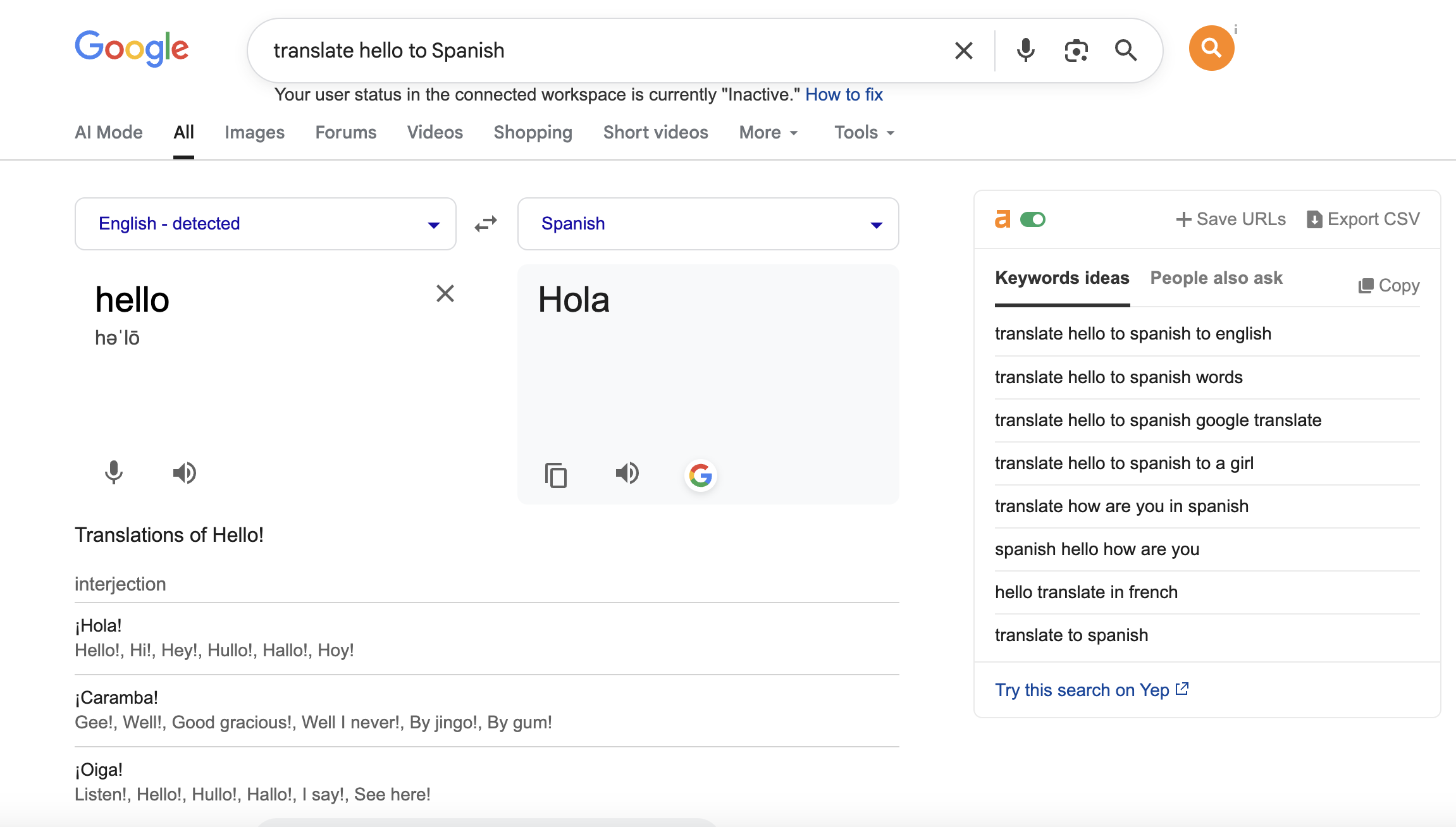
For a translation tool, this is a particular kind of problem. The users who Google can satisfy with an inline widget are exactly the casual users who would have come to us for quick, low-stakes translations. They don't click through anymore. Why would they?
What this means in practice is that the queries driving our impressions (the high-volume language pair searches) are increasingly impression-only. Google shows us to people and then answers their question itself. Our click-through rate was declining even as our ranking held or improved.
We weren't losing to competitors. We were losing to the search engine itself.
The rise of AI Overviews compounded this. For informational queries adjacent to translation ("is Google Translate accurate," "best AI translator for legal documents," "how does machine translation work") Google now generates an AI summary at the top of the page. Organic results sit below it. The traffic that used to flow from users clicking through to read a detailed answer increasingly stops at the summary.
This is not a problem unique to us. But it hits translation tools harder than most because the primary use case ("translate this") is so easily satisfied in-place.
What the data told us about where real intent lives
When we dug into our conversion data by traffic source, we found something that reframed how we think about growth entirely.
Users arriving from Reddit converted dramatically better than users arriving from Google organic search. Not marginally, the gap was significant enough that a small amount of Reddit traffic was generating disproportionate revenue. The same pattern held for traffic arriving from ChatGPT citations and from Bing. Direct traffic (people typing our URL or coming back from memory) converted at rates that made organic search look passive by comparison.
The interpretation isn't complicated. Users who find us through Reddit have usually seen someone recommend us in the context of a specific problem. They arrive with context: they know what they need, they've seen our name in a relevant discussion, and they're ready to try something. Users arriving from Google's organic results for "English to German translation" may simply be looking for a quick translation, the same task Google now handles in-place.
Intent quality varies enormously by source, and we had been optimizing for volume rather than intent quality.
What we also noticed: we were generating essentially no traffic from ChatGPT, Gemini, or Perplexity — the AI systems that are increasingly becoming the first stop for research and decision-making. When someone asks ChatGPT to recommend an AI translation tool, we weren't in the answer. That's a distribution problem we had done nothing to address.
How we're rebuilding for a world where Google isn't the gatekeeper
The first thing we did was stop pretending the problem would resolve itself. Traffic had been declining steadily, and the underlying cause (Google absorbing the queries we depended on) was not going to reverse.
We made a few concrete strategic shifts.
We pivoted away from top-of-funnel content. Blog posts targeting high-volume, low-intent translation keywords (the kind that show up in content gap analyses and feel logical to write) were generating traffic but not customers. We stopped producing them. The new bar for a piece of content is whether it speaks to someone who is already in the process of choosing a translation solution, not someone who is idly curious about how machine translation works.
We started optimizing for AI citation, not just search ranking. This is newer territory and we're still learning, but the principle is straightforward: the content that AI systems cite is specific, factual, and attributable. Vague claims and generic advice don't get surfaced. Concrete data, named methodologies, and documented outcomes do. For us, that means writing about our SMART consensus approach with enough specificity that an AI system can reference it accurately — not as marketing language, but as a describable technical reality.
We focused on document translation as our clearest differentiation. The queries where Google cannot answer in-place are the queries that require file handling, layout preservation, and format retention. "Translate my PDF without losing the formatting" is not something Google solves with an inline widget. This is where MachineTranslation.com's actual capabilities matter, and it's the territory we need to own in search, in AI systems, and in the conversations people have when recommending tools.
We started treating Reddit, product directories, and AI tool databases as distribution channels. Not by posting promotional content (that gets flagged and ignored) but by being findable in the places where genuine recommendations happen. When someone on Reddit asks for a translation tool that handles technical documents, we want the correct answer to include us. That requires being present in conversations over time, not just ranking for the query.
What this means for how we think about content
The practical implication of all of this is that we've had to be much more honest about what content actually does.
Most SEO-driven content for a translation tool is fundamentally interchangeable. If you strip the logo and the product name, a post titled "How to translate a legal document accurately" could be published by any of our competitors. It ranks because it targets a keyword, not because it captures something only we can say.
The content that actually serves us (and, more importantly, serves the reader) is the content that's grounded in what we've specifically built and what we've specifically learned. Our consensus mechanism produces data that no other translation tool generates: agreement scores across multiple models, divergence signals that indicate where a translation is contested, accuracy patterns across language pairs and content types. That's genuinely proprietary. A post that builds from that data is one that our competitors cannot replicate.
The same logic applies to this piece. I'm writing this because we went through something real (a structural shift in how our traffic worked) and the decisions we made in response are specific to who we are and what we're building. A generic AI translation company would have different numbers, different channels, different conclusions. Our situation is ours.
That's the standard we're holding ourselves to going forward: content that could only come from us, because it's built from what only we know.
The uncomfortable truth about building on search
I want to be direct about something, because I think the SEO industry sometimes makes this harder to see than it should be.
Organic search is a rented channel. You do not own your ranking. You do not own the traffic it delivers. And when the search engine decides to answer the query itself (whether through an AI Overview, an inline widget, or a featured snippet), your ranking becomes irrelevant. The query is satisfied before the user reaches you.
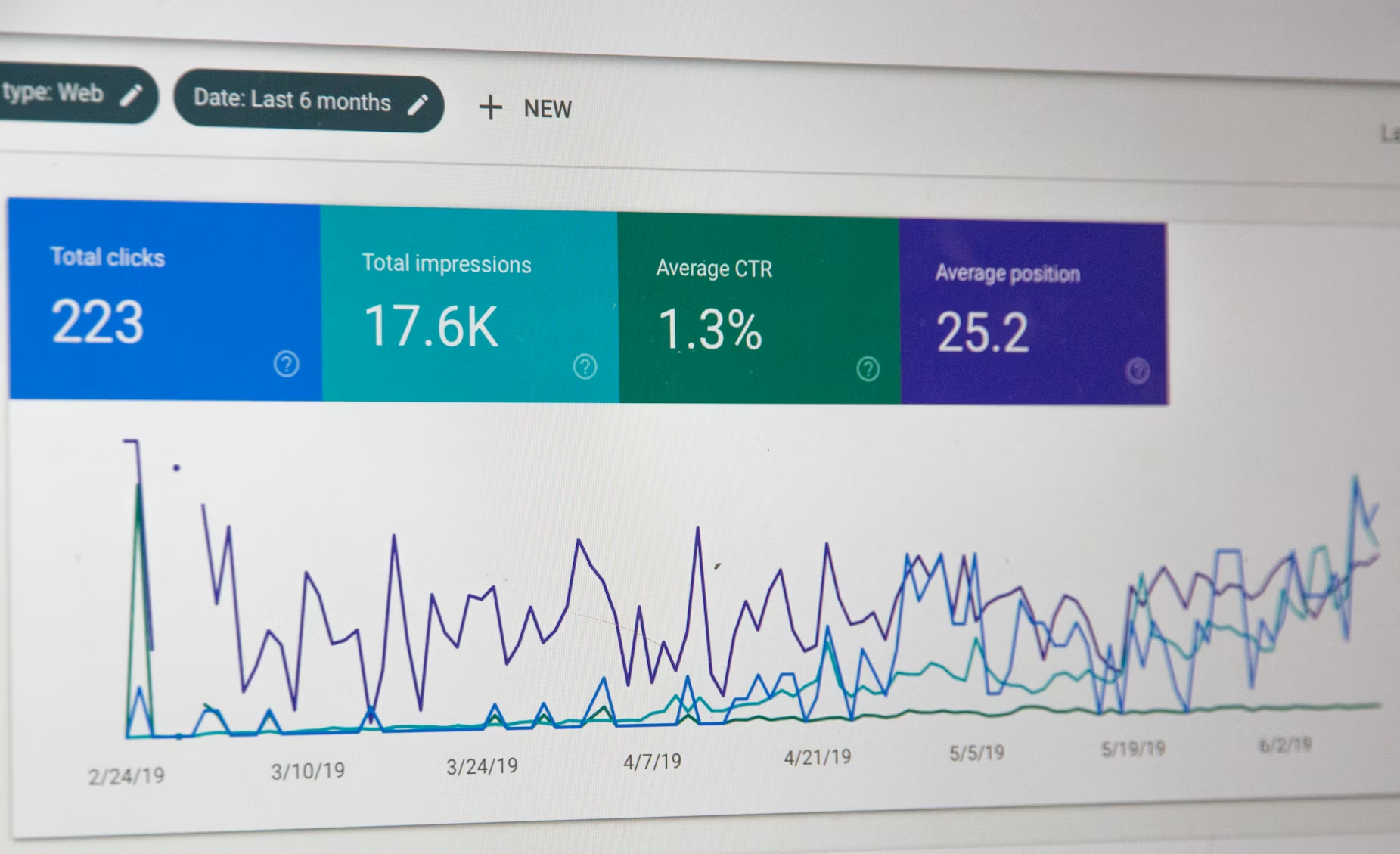
This isn't an argument against SEO. We still invest in search, and we still think it matters. Ranking for the right queries (the ones where users need to click through because the query requires real product engagement) is valuable and worth pursuing. But it's a supporting channel, not a foundation.
The foundation has to be something you own: your product's reputation in communities where your users gather, your presence in the AI systems that are increasingly mediating discovery, the direct relationships that bring people back without needing a search engine to remind them you exist.
We're building that foundation now. It's slower than ranking for keywords. It compounds differently. But it is ours.

By William Mamane
Connect on LinkedInWilliam leads marketing and growth at Tomedes, where he turns SEO experiments and real campaign data into the strategy behind MachineTranslation.com's reach. He writes about how AI products actually get found and trusted plus the tactics that work, the ones that don't, and what search is rewarding right now.
Share:


