October 21, 2026
How to translate official documents for a visa or immigration application
A visa or immigration application needs a complete English translation of every foreign-language document, with a signed certification from the translator that the translation is complete and accurate and that the translator is competent in both languages. AI can help you read and prepare your documents. It cannot sign that certification, and a draft from MachineTranslation.com is not a certified translation by itself.
I am direct about this because the stakes are someone's application. The rule is also short enough to read in one sitting, and I will show you where it comes from. Tomedes has been building and managing professional translation networks since 2007. That history is what makes Human Verification on MachineTranslation.com possible.
This guide covers what the authority requires, who can sign a translation, where AI saves you time, and what to check before you submit. It describes published requirements and is not legal advice. For a complex case, an immigration attorney is the right call.
Key takeaways
- Every foreign-language document you submit needs a full English translation with the translator's signed certification of accuracy and competence. For USCIS the rule is 8 CFR 103.2(b)(3).
- Who may translate depends on the authority. Canada's IRCC bars family members and representatives, while the US regulation sets what the certification says and is silent on who signs.
- An AI draft is for reading your documents, catching name and date variants, and preparing questions. It is not a certified translation.
- When models disagree on a name, a date, or a place, that is a reason to check the original.
- Check names, dates, stamps, and the certificate itself before you submit.
What does an immigration authority require for a translated document?
For USCIS, the rule is one sentence in 8 CFR 103.2(b)(3). Any document containing a foreign language must come with a full English translation that the translator has certified as complete and accurate, together with the translator's certification that they are competent to translate from the foreign language into English.
That sentence holds three requirements: a full translation, a certification that it is complete and accurate, and a certification of the translator's competence. The regulation does not mention notarization, and it does not ask for a translator license. It asks for a signed statement from a person who answers for the work.
Full means everything on the page. Stamps, seals, handwritten notes, and margin annotations are part of the document, and a translation that skips them is incomplete. That is how our immigration team treats them at Tomedes.
Can you translate your own documents for immigration?
It depends on the authority, and the official sources differ on who may sign.
Who may translate, by authority
| Authority | What its official source says | Who may translate |
|---|---|---|
| USCIS, United States | A full English translation, certified by the translator as complete and accurate, with a certification of competence | The regulation does not say. It sets what the certification must state |
| IRCC, Canada | A translation by a certified translator in good standing with a provincial or territorial organization, or an equivalent. Applications submitted without translations are returned as incomplete | Not the applicant's family members or representatives |
The Canadian rule is on the IRCC page on translating supporting documents. Where a rule is silent, as the US regulation is on who signs, I recommend an independent translator. The certification says the translation is accurate and the translator competent, and an officer reviewing your case can question a certificate signed by the person whose case it is.
Other authorities set their own rules. Read the instructions for your office and your form, because a rule that works for one filing can fail for another.
Where does AI fit when the translation has to be certified?
AI belongs before the certificate. We say so on our own language pages: the tool prepares drafts, standardizes terminology, and speeds review, and the final certified translation comes through the proper channel. I would not send an AI draft to an immigration office.
It still earns its place in three jobs. It lets you read documents in a language you cannot read, so you know what you are submitting. It shows you how names, places, and dates vary across your documents before they reach a translator. And it gives you something to compare against when the certified translation comes back.
On a standard civil-record term the models agree quickly. In a test on “certificado de nacimiento,” five models ran at once and all five returned “birth certificate,” reaching consensus in 484 milliseconds with no disputed terms, as we describe in our piece on AI translation for immigration documents. The parts to watch are names, place names, dates in local formats, and anything handwritten or stamped.
“When models disagree on a name, a date, or a place, that disagreement is the signal to go back to the original. We treat 90% agreement with zero or one disputed term as a reasonable candidate to ship for everyday business content, and agreement in the mid-80s or several disputed terms as a reason to route the text to a human. A civil record going to an immigration office sits on the human side of that line, and a consensus score cannot sign a certificate.” - Rachelle Garcia, AI Lead at Tomedes / MachineTranslation.com
How do you translate official documents for a visa or immigration application, step by step?
Six steps, in the order that protects the filing.
Step 1: Find out what your authority asks for
Read the instructions for your form and your office. The US rule above covers USCIS filings, Canada's covers IRCC, and other authorities add their own conditions on who may translate and how the certification reads. Write down which documents the form lists.
Step 2: List and scan every foreign-language document
The US rule covers any document containing a foreign language, so the list runs past birth and marriage certificates to police certificates, diplomas, bank statements, and property deeds. Scan each one clearly, front and back, with the stamps and handwriting readable.
Step 3: Read your documents with AI first
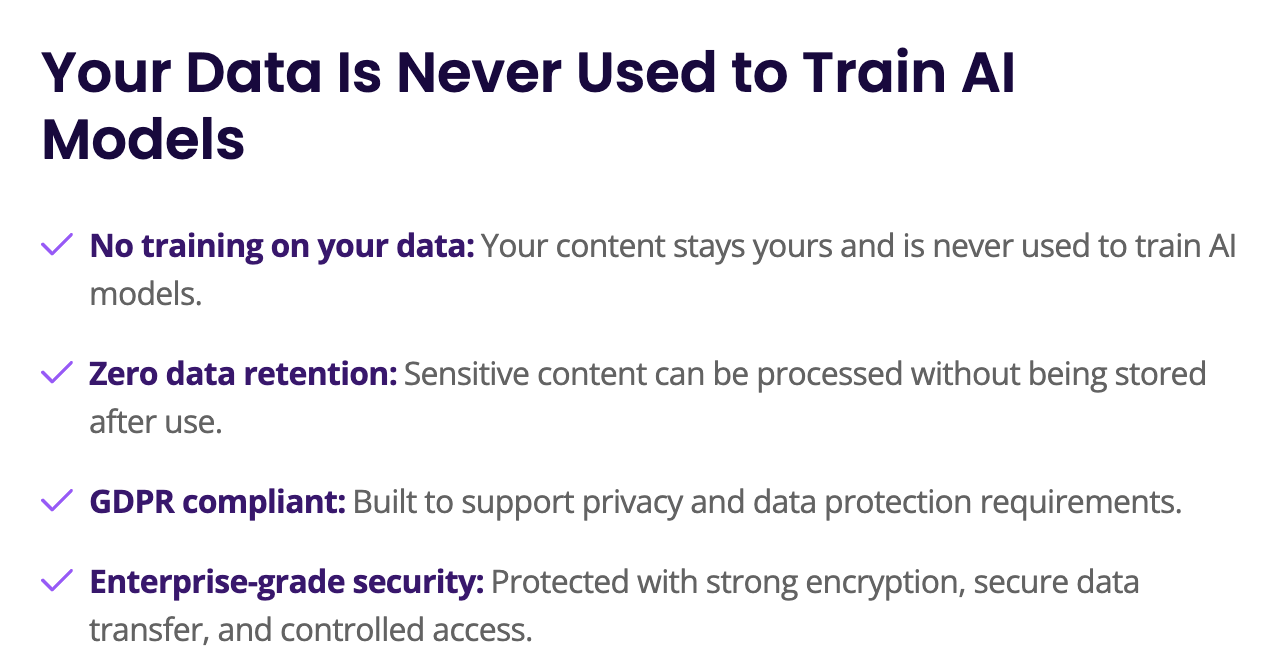
Upload each scan on the document translation page. A scanned PDF is read with OCR before translating and comes back as an editable Word file. MachineTranslation.com uses only trusted and secure AI sources to process your translations.
Step 4: Choose who signs the translation
The signature is the point. Pick a translator or translation company that will translate everything on the page and sign a certification stating the translation is complete and accurate and that they are competent in both languages. The Tomedes certified translation service lists a signed certificate of accuracy at no extra cost, and a second linguist reviews the work independently.
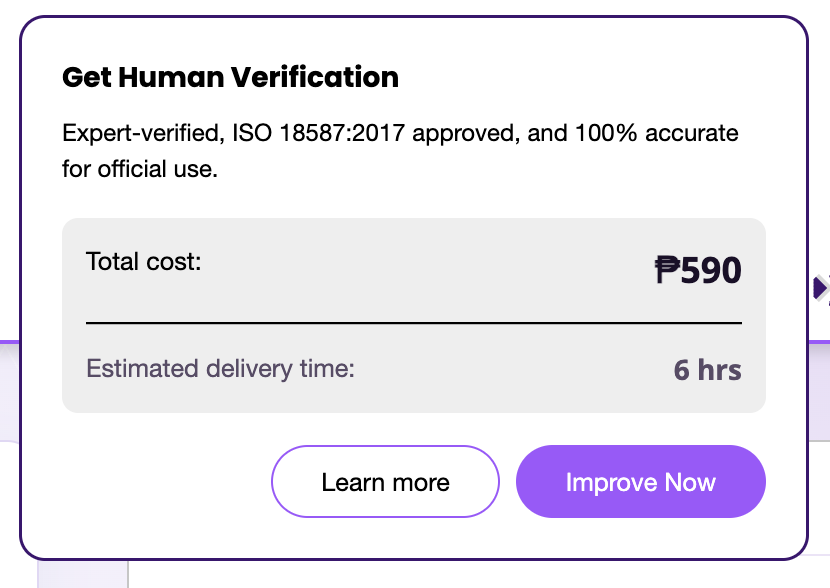
Human Verification on MachineTranslation.com sends the AI output to a professional translator for review and returns it with a guarantee, as we describe in our guide to human verification. Our language pages are explicit that for visas the tool should be combined with Human Verification and a certification service, so that a qualified linguist signs and validates the final text.
Step 5: Check the certified translation against your originals
Put the original and the translation side by side and run the checks in the section below. Send corrections back to the translator in writing, with the page and line, and ask for a reissued certificate if the text changes.
Step 6: Submit the translation with its certificate
File the translation, the signed certification, and the original or copy the form instructions ask for. Keep a complete copy of everything you submit.
How much does a certified translation for an immigration filing cost?
Certified translation is usually priced per word or per page, so cost follows length. Tomedes lists a certified rate from $0.08 per word with the certificate included. At that rate, a 250-word birth certificate comes to about $20, and longer records such as court judgments or police certificates cost more in proportion.
Ask for the total before you order, and confirm that the certificate is included and whether the receiving office asks for anything beyond it, such as notarization.
What should you check before you submit?
- Names: spelled exactly as in the passport and on the forms, and the same in every document.
- Dates: day and month in the right order, since local formats differ.
- Places and numbers: place names, ID numbers, and registry numbers match the original.
- Stamps, seals, and handwriting: each one is translated or described, not skipped.
- Every page: the translation is complete, with no missing pages or lines.
- The certificate: it states that the translation is complete and accurate, that the translator is competent in both languages, and it carries the translator's name, signature, date, and contact details.
If something does not match, ask the translator. A mismatch between the certified text and your AI draft is a question, and it does not prove either one wrong.
You can upload your documents to read them first, then send the originals to a translator who will sign. A decision on someone's application rests on a signature, and the signature has to come from a translator who answers for the work.
Frequently asked questions
1. Can I translate my own documents for immigration?
It depends on the authority. Canada's IRCC does not allow the applicant's family members or representatives to translate. The US regulation sets what the translator's certification must state and does not say who signs, and Tomedes recommends an independent translator.
2. What are the requirements for translating documents for USCIS?
Every document containing a foreign language needs a full English translation that the translator has certified as complete and accurate, along with the translator's certification that they are competent to translate from the foreign language into English. The rule is 8 CFR 103.2(b)(3).
3. What translations are accepted by USCIS?
Complete English translations that carry the translator's signed certification of accuracy and competence. The regulation does not mention notarization or a translator license.
4. Does an AI translation count as a certified translation?
No. An AI draft carries no signed certification from a translator. MachineTranslation.com's language pages say the tool does not by itself create a legally valid certified translation, and that a qualified linguist has to sign the final text.
5. How much does a translator for immigration cost?
Certified translation is usually priced per word or per page, so cost follows length. Tomedes lists a certified rate from $0.08 per word with the signed certificate of accuracy included, which puts a 250-word birth certificate at about $20.
6. How do I get documents translated for a visa?
Check your authority's rules, scan every foreign-language document, read them first with AI if that helps, have a qualified translator produce and certify the full English translation, check it against the originals, and submit it with the certificate.
7. How do I translate property documents for a visa application?
Property deeds and similar records follow the same rule as any document containing a foreign language: a full English translation with the translator's certification. Include every stamp, seal, and handwritten note.

By Ofer Tirosh
Connect on LinkedInOfer founded Tomedes in 2007 and now leads the company's push to combine two decades of human translation expertise with AI. He writes about where the language industry is actually heading and the shifts nobody's ready for, the bets that paid off, and the ones that didn't.
Share:


